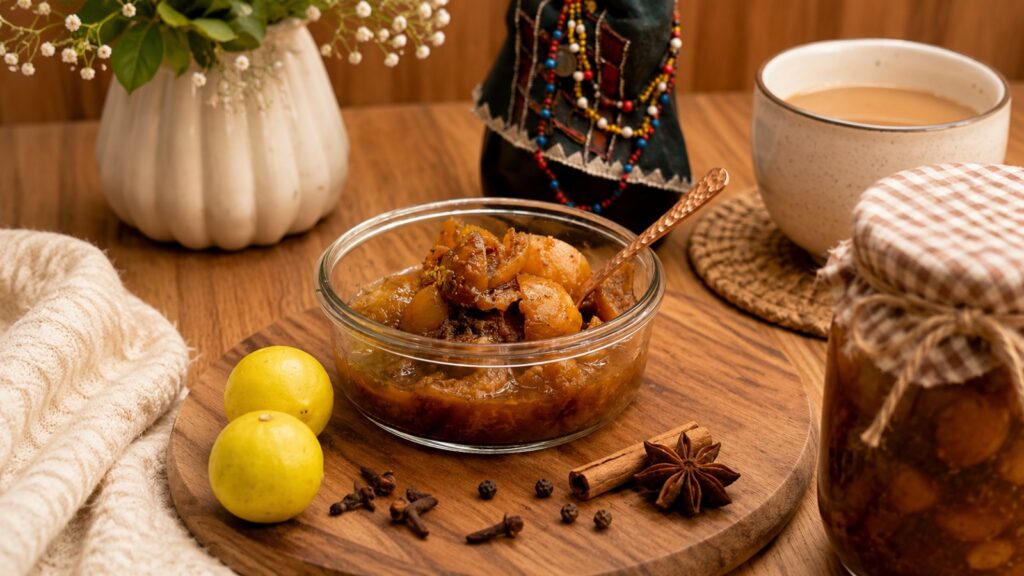
Pickles have a special place in Indian kitchens. A small spoonful beside dal-chawal, paratha, khichdi, or a simple homemade meal can completely change the experience.
But when choosing a pickle, many people face a common question: homemade pickles vs packaged pickles which one is actually different, and why?
At first glance, both may look similar. Both can contain mangoes, lemons, chillies, vegetables, spices, oil, and salt. However, the difference often lies in the ingredients, preparation method, freshness, taste, preservatives and overall eating experience.
A homemade pickle often reminds us of something familiar – a recipe prepared in small batches, with carefully selected ingredients and spices that bring out a distinctive flavour. Packaged pickles, on the other hand, are generally produced for larger-scale distribution and longer shelf life.
Let’s understand the difference clearly so you can make a more informed choice for your kitchen and family.
What Is the Main Difference Between Homemade and Packaged Pickles?
The biggest difference between homemade and packaged pickles is usually the way they are prepared and produced.
Homemade pickles are generally made in smaller batches using traditional recipes and carefully chosen ingredients. Packaged pickles are typically manufactured on a larger scale, where consistency, distribution, packaging, and shelf life are important considerations.
Of course, not every homemade or packaged pickle is made in exactly the same way. That is why reading the ingredients and understanding the preparation process is always useful.
1. Ingredients Used in Homemade vs Packaged Pickles
Homemade Pickles Often Focus on Simple, Recognisable Ingredients
One of the first things people notice about homemade-style pickles is the ingredient list. Traditional recipes commonly use familiar ingredients such as raw mangoes, lemons, green chillies, seasonal vegetables, salt, spices, and oil.
The beauty of a carefully prepared homemade pickle is that the ingredients themselves play an important role in the final flavour.
Imagine biting into a tangy mango pickle where you can taste the sharpness of the mango, followed by mustard, chilli, and aromatic spices. That layered flavour is often what makes traditional pickles feel so memorable.
Packaged Pickles May Be Formulated for Scale and Shelf Stability
Commercially packaged pickles can vary significantly from brand to brand. Some may use simple recipes, while others may include additional ingredients to maintain consistency, texture, flavour, or shelf stability.
This is why checking the label is important rather than assuming that every packaged pickle is the same.
2. The Preparation Process Makes a Big Difference
Homemade Pickles Are Often Prepared in Smaller Batches
Small-batch preparation allows greater attention to ingredients, cutting, spice blending, and flavour development.
Traditional pickle-making is not always a rushed process. Depending on the recipe, ingredients may need time to absorb salt, spices, and oil. This gradual process can help create the deep, familiar flavours people associate with homemade achar.
There is also something personal about a recipe that has been prepared with attention rather than simply produced in large quantities.
Packaged Pickles Are Designed for Consistency
Large-scale production focuses on producing a consistent product across multiple batches. This can be convenient because customers generally know what to expect when they purchase the same product again.
However, mass production may not always recreate the small-batch character that people associate with traditional homemade pickles.
3. Taste and Flavour Experience
Homemade Pickles Can Have a More Distinctive Character
One of the most noticeable differences between homemade pickles and packaged pickles is often the flavour.
A homemade recipe may have variations depending on the ripeness of the mangoes, the strength of the chillies, the quality of spices, or the amount of time allowed for the flavours to mature.
For many people, this natural variation is part of the charm.
A spoonful of lemon pickle might taste brighter and tangier, while a mango pickle may develop a deeper, richer flavour as the spices blend with the fruit over time.
Packaged Pickles Usually Aim for Uniform Taste
Packaged products are generally designed to provide a similar flavour profile from one batch to another.
This consistency can be convenient. However, people looking for a more traditional or home-style flavour may prefer the complexity and individuality of a carefully prepared homemade pickle.
4. Preservatives and Shelf Life
Homemade Pickles Can Use Traditional Preservation Methods
Traditional pickle recipes have long relied on ingredients such as salt, oil, spices, acidity, and proper storage to help preserve the product.
The exact method depends on the type of pickle and recipe.
For example, mustard oil, salt, and spices have traditionally played an important role in Indian pickle preparation. However, shelf life can vary depending on ingredients, moisture, hygiene, storage conditions, and preparation methods.
Packaged Pickles May Prioritise Longer Distribution Periods
Packaged pickles often need to travel through warehouses, stores, and distribution networks before reaching the customer.
For this reason, the formulation may be designed with longer storage and distribution requirements in mind.
Again, the best approach is to read the product label and understand what ingredients are being used.
5. Freshness and Small Batch Appeal
Homemade Pickles Offer a More Personal Food Experience
There is a reason many people still search for homemade mango pickle, traditional Indian achar, and preservative-free homemade pickles.
Food prepared in smaller batches can feel more personal. The focus is often on ingredient quality, traditional recipes, and flavour rather than producing extremely large quantities.
It is similar to the difference between a meal prepared carefully in a home kitchen and a product made on a large production line. Both may serve the same purpose, but the experience can feel different.
Packaged Pickles Offer Convenience
Packaged pickles are widely available and convenient to purchase. They can be a practical option when you need something quickly or want a familiar product.
The choice ultimately depends on what matters most to you—convenience, ingredient preferences, traditional flavour, or small-batch preparation.
Homemade Pickles vs Packaged Pickles: Key Differences at a Glance
When comparing homemade pickles and packaged pickles, consider these important factors:
- Ingredients: Homemade recipes often use simple, familiar ingredients, while packaged products may vary depending on their formulation.
- Preparation: Homemade pickles are commonly prepared in smaller batches, while packaged pickles are generally produced at a larger scale.
- Taste: Homemade pickles may offer more traditional and distinctive flavour variations.
- Shelf Life: Packaged pickles are often designed for longer distribution and storage periods.
- Preservation: Traditional homemade recipes may rely on ingredients such as salt, oil, and spices, while packaged products can use different preservation approaches.
- Convenience: Packaged pickles are easy to find and purchase, while homemade-style pickles may appeal to people seeking a more traditional experience.
- Personal Preference: The right choice depends on your taste, ingredient preferences, and what you value in a pickle.
Homemade Pickles vs Packaged Pickles
| Feature | Homemade Pickles | Packaged Pickles |
| Preparation | Usually prepared in smaller batches | Generally produced on a larger scale |
| Ingredients | Often based on traditional, recognisable ingredients | Can vary depending on the manufacturer |
| Flavour | May offer natural variation and traditional taste | Usually designed for consistency |
| Preservatives | Depends on the recipe and preparation method | Depends on the product formulation |
| Shelf Life | Varies based on ingredients and storage | Often designed for wider distribution and longer storage |
| Texture | Can vary according to the recipe and ingredients | Usually maintained for consistency |
| Production Style | Small-batch and recipe-focused | Standardised and commercially produced |
| Convenience | May require ordering from a specialist homemade brand | Widely available in stores and online |
How to Choose the Right Pickle for Your Home
Choosing between homemade and packaged pickles does not have to be complicated.
Check the Ingredient List
Look for ingredients you recognise and feel comfortable including in your meals.
If you prefer a traditional recipe, look for pickles made with real fruits or vegetables, spices, and appropriate oils.
Consider Your Taste Preferences
Do you enjoy bold, spicy mango pickle? Or do you prefer the sweet tanginess of lemon pickle?
Different recipes create very different experiences, so choose according to your family’s preferences.
Look at the Preparation Style
If small-batch preparation and traditional recipes are important to you, a homemade-style pickle may be a better fit.
Follow Storage Instructions
Every pickle has its own storage requirements. Always follow the instructions provided by the manufacturer or maker and use a clean, dry spoon to help maintain quality.
Choose Quality Over Just Convenience
The cheapest or most readily available option is not always the one you will enjoy most.
A good pickle can turn an ordinary meal into something memorable, so flavour, ingredient quality, and preparation style are worth considering.
Expert Insights: What Should You Look for When Buying Pickles?
From a food quality and consumer perspective, the best pickle is not simply defined by whether it is homemade or packaged.
The more useful question is: What ingredients are used, how is it prepared, and does the flavour match your preferences?
A good-quality pickle should provide a balanced combination of the main ingredient, spices, salt, acidity, and oil where applicable. The texture should feel appropriate for the recipe, and the product should be handled and stored according to proper food safety practices.
For consumers who enjoy traditional flavours, small-batch homemade pickles can offer a familiar, nostalgic experience. For those who prioritise convenience and easy availability, packaged options may be practical.
The smartest choice is to understand what you are buying instead of relying only on the words “homemade” or “packaged.”
Final Thoughts
The debate around homemade pickles vs packaged pickles is not simply about choosing one type over another. It is about understanding what makes each option different.
Homemade-style pickles often stand out because of their traditional recipes, small-batch preparation, carefully selected ingredients, and distinctive flavours. Packaged pickles offer convenience and consistency, especially for people who want easy availability.
If you love the comforting taste of traditional Indian achar, a thoughtfully prepared homemade pickle can bring back memories of family kitchens, summer afternoons, and meals made more enjoyable with just one extra spoonful.
The next time you choose a pickle, take a moment to look beyond the jar. Check the ingredients, understand the preparation style, and choose the flavour that feels right for your table.
After all, a good pickle is never just a side dish. Sometimes, it is the most memorable part of the meal.
Annie’s Bake House: A Taste of Homemade Tradition
At Annie’s Bake House, we bring the warmth of traditional homemade flavours to your table with carefully prepared, small batch pickles made for people who appreciate authentic taste.
People Also Ask
1. What is the difference between homemade pickles and packaged pickles?
Homemade pickles are generally prepared in smaller batches using traditional recipes, while packaged pickles are usually produced on a larger scale for consistency, distribution, and convenience.
2. Are homemade pickles better than packaged pickles?
The answer depends on your preferences. Homemade pickles may appeal to people who prefer traditional flavours and small-batch preparation, while packaged pickles can be more convenient and widely available.
3. Do homemade pickles contain preservatives?
Some homemade pickles may be prepared without added preservatives and rely on traditional preservation methods such as salt, oil, spices, and acidity. The exact ingredients depend on the recipe.
4. Why do homemade pickles taste different?
Homemade pickles can taste different because of variations in ingredients, spice blends, preparation methods, ripening time, and small-batch production.
5. Are packaged pickles healthy?
The nutritional profile of packaged pickles varies by product. Check the ingredient list, nutrition information, serving size, and storage instructions before purchasing.
6. Which pickle is better for daily meals?
Choose a pickle that suits your taste and dietary preferences. Consider the ingredients, salt content, preparation method, and recommended serving size as part of a balanced diet.
7. How can I choose a good homemade pickle online?
Look for clear ingredient information, details about the preparation style, proper packaging, storage instructions, and a flavour profile that matches your preferences.