A baby’s first cake is more than just a dessert. It can become one of those sweet little family memories that parents remember for years – the first birthday candle, the tiny hands reaching toward the cake, and that priceless expression after the first taste.
But when choosing a cake for young babies, parents naturally have different concerns than they would for an ordinary celebration cake. Is it soft enough? Is it easy for a baby to eat? What ingredients should parents look for? Should the cake be homemade? And how can you make a special occasion enjoyable without making the cake unnecessarily heavy or overly sweet?
For young children, texture and ingredients matter just as much as flavour. A soft, moist cake made with thoughtfully selected ingredients can be a more suitable choice for a baby’s special occasion than a very rich, heavily decorated cake.
This guide explains what parents should consider when choosing a soft cake for babies, how to select age-appropriate ingredients, and what makes a homemade cake a comforting option for family celebrations.
Important: Babies develop at different rates. Parents and caregivers should consider the child’s age, eating skills, allergies, and advice from their pediatrician when introducing new foods.
Why Choosing the Right Cake for Young Babies Matters
Adults often choose cakes based on appearance, flavour, frosting, or decoration. For babies, those priorities change.
A young child may not care whether a cake has elaborate piping or several layers. What matters more is whether the cake is soft, moist, easy to handle, and made with ingredients the child can safely consume.
1. Soft texture is easier to manage
A cake intended for young children should ideally have a tender and moist crumb rather than a hard, dry, or chewy texture.
Softness makes it easier to break into small, manageable pieces appropriate to the child’s eating abilities.
2. Simple ingredients can be a sensible choice
A cake with a straightforward ingredient list can make it easier for parents to understand what their child is eating.
Homemade cakes are particularly appealing because parents can pay closer attention to the ingredients used.
3. Avoiding excessive sweetness is important
Babies and very young children do not need intensely sweet flavours to enjoy food. Naturally mild flavours from ingredients such as ripe banana, dates, or other fruit-based ingredients can provide a pleasant taste.
However, parents should always check the full ingredient list and consider the child’s age and dietary needs.
4. The cake should complement the occasion
A baby’s birthday or milestone celebration does not have to revolve around an oversized, heavily frosted cake.
A small, soft cake can be enough for photographs, a few family members, and a memorable first taste.
5. Every baby has different needs
One baby may happily enjoy a soft banana-based cake, while another may have a food allergy or sensitivity that requires a completely different choice.
That is why there is no single “perfect cake for babies.” The best option depends on the individual child.
What Makes a Good Cake for Young Babies?
When parents search for a cake for young babies, they are usually looking for something that combines softness, flavour, and simple ingredients.
Here are the main characteristics worth considering.
Soft and Moist Texture
Dry cake can crumble easily and may be difficult for a young child to manage. A moist, tender cake is generally more appealing for little mouths.
Banana-based cakes, fruit cakes with an appropriately soft texture, and other moist homemade cakes can be worth considering.
Mild Flavour
Babies do not necessarily need strong chocolate, caramel, or intensely sweet flavours.
Mild flavours such as banana, vanilla, fruit, or gently spiced cake can be more suitable for introducing a new cake experience.
Carefully Considered Ingredients
Parents may prefer cakes made with familiar ingredients rather than recipes containing a long list of artificial flavours, colours, or unnecessary additives.
A simple homemade recipe can provide greater transparency over what goes into the cake.
Appropriate Portion Size
A baby does not need a large slice.
A small portion allows parents to introduce the cake as part of the celebration without making it the main part of the child’s meal.
Fresh Preparation
Freshly prepared cake generally has a softer texture and more enjoyable flavour than cake that has been sitting around for too long.
For a baby’s special occasion, freshness can make a noticeable difference.
Homemade Cake for Babies: Why Parents Often Prefer It
There is something comforting about homemade food, especially when preparing something for a little one.
Imagine a first birthday morning. The house is decorated, family members are arriving, and someone brings out a small, beautifully prepared cake. Instead of choosing a complicated dessert simply because it looks impressive, the family has selected a soft cake with familiar ingredients that the baby can experience as part of the celebration.
That is the appeal of homemade cake.
Better Ingredient Awareness
When a cake is homemade, parents can ask questions about the ingredients and preparation process.
This can be particularly useful when the child has specific dietary requirements or known food allergies.
Familiar Flavours
Homemade cakes can focus on simple flavours rather than overwhelming sweetness.
Banana and dry-fruit-inspired cakes, for example, can offer interesting flavours while maintaining a comforting homemade character.
Soft, Fresh Texture
Freshly baked cakes can have a naturally tender texture that works well for family celebrations involving young children.
A More Personal Celebration
A homemade cake can also feel more meaningful. The cake becomes part of the family memory rather than simply another item on the celebration table.
Ingredients Parents Should Think About
Choosing a homemade cake for babies involves more than looking at the word “healthy” on a menu. Parents should consider the complete ingredient list.
Natural Fruit Ingredients
Ripe banana and other fruit-based ingredients can contribute moisture and natural flavour.
Banana is especially popular in homemade cakes because it gives cakes a soft texture and a naturally sweet taste.
Whole Wheat Ingredients
Some parents prefer whole-wheat-based cakes because they fit their family’s everyday food preferences.
However, whole wheat does not automatically make a cake suitable for every baby. Texture, preparation, portion size, and the child’s individual dietary needs still matter.
Nuts and Dry Fruits
Nuts and dry fruits require particular care around young children because of allergy considerations and choking risks.
Parents should never assume that a cake containing walnuts, almonds, raisins, or other dry fruits is automatically appropriate for a baby.
If a cake contains nuts or dried fruit, parents should consider the child’s age, eating ability, allergy history, and professional dietary advice.
Sugar and Sweeteners
Parents may prefer cakes that are not excessively sweet.
However, terms such as “no added sugar,” “jaggery,” or “naturally sweetened” should not be interpreted as meaning a food is automatically suitable for every infant.
The child’s overall diet and age remain important.
Dairy and Eggs
Milk, butter, cream, and eggs are common cake ingredients. They can also be important allergens for some children.
Parents should check ingredients carefully, particularly when introducing a food for the first time.
How to Choose the Right Cake for a Baby’s Birthday
Consider the Child’s Age
The right cake for a toddler may not be appropriate for a younger infant.
Always consider developmental readiness, eating skills, and any guidance provided by your child’s pediatrician.
Check the Texture
Ask whether the cake is:
- Soft and moist
- Easy to break into small pieces
- Free from hard decorations
- Not excessively chewy or dry
Check the Ingredients
Before ordering or serving the cake, ask about:
- Flour used
- Sweeteners
- Dairy
- Eggs
- Nuts
- Dry fruits
- Chocolate
- Frosting
- Artificial colours or flavours
Keep Decorations Simple
Hard candies, whole nuts, firm chocolate pieces, and other hard decorations may not be appropriate for young children.
A simple cake can also look beautiful without creating unnecessary concerns.
Think Beyond Appearance
A brightly decorated cake may look wonderful in photographs, but appearance should not be the only deciding factor.
For a baby, softness, ingredients, freshness, and suitability should come first.
Cake Types Parents May Consider
Different cake flavours can suit different family preferences.
Banana Cake
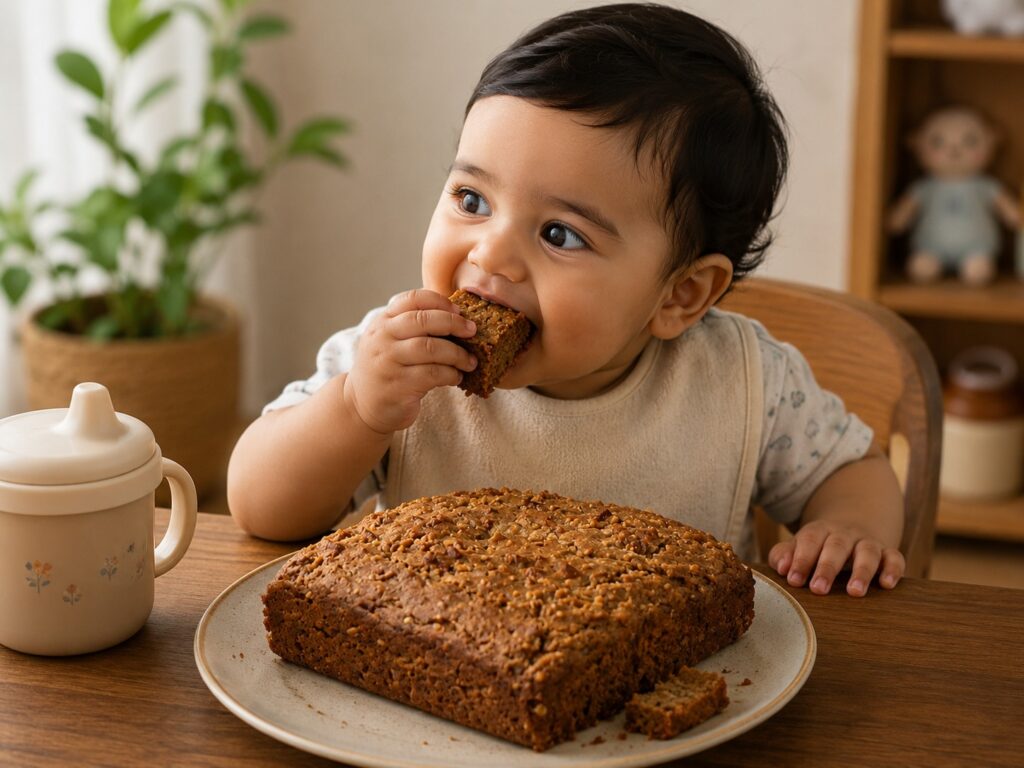
Banana cake is a popular choice for families looking for a soft, naturally flavourful cake.
Ripe bananas can contribute moisture and sweetness, making them a familiar ingredient in homemade baking.
Banana Walnut Cake
Banana walnut cake combines the flavour of ripe bananas with walnuts.
For young children, however, parents must pay particular attention to the presence and preparation of nuts because whole or large pieces of nuts can present a choking risk and nuts are a common allergen.
Whole Wheat Cake
Whole wheat cakes can appeal to parents who prefer whole-grain ingredients.
The final texture is still important. A cake made with whole wheat should remain soft and moist enough for the intended age group.
Fruit Based Cake
Fruit-inspired cakes can offer gentle flavours and an appealing natural taste.
Parents should still check whether the cake contains dried fruit, nuts, added sugar, or other ingredients that may not suit their child.
Eggless Cake
An eggless cake may be useful for families who prefer egg-free baking or have specific dietary requirements.
However, “eggless” does not mean allergen free or automatically suitable for babies, so the complete ingredient list should always be checked.
Homemade Baby Cake vs Regular Celebration Cake
| Feature | Homemade Baby Friendly Cake | Regular Celebration Cake |
| Texture | Usually soft and moist | Can range from soft to firm |
| Sweetness | Can be kept mild | Often sweeter |
| Ingredients | Can be selected carefully | May contain multiple additives or fillings |
| Decoration | Usually simple | Often elaborate |
| Frosting | Can be light or limited | May be rich and heavy |
| Flavour | Mild and familiar | Can be intense or highly sweet |
| Parent control | Greater ingredient awareness | Depends on the bakery |
| Best focus | Simple family celebration | General celebrations |
The comparison does not mean every regular cake is unsuitable or every homemade cake is automatically appropriate. The key is to look at the specific ingredients, texture, preparation, and age of the child.
Expert Insights for Choosing a Cake for Young Babies
When selecting a cake for a young child, think like a parent first and a party planner second.
A beautiful cake is wonderful, but the most important questions are practical:
Is it soft?
What ingredients does it contain?
Does my child already tolerate those ingredients?
Are there nuts, hard decorations, or other potential choking hazards?
Is the cake excessively sweet or heavily frosted?
Can I serve it in a small, age appropriate portion?
These simple questions can help parents make a more informed decision.
Another important point is that cake should remain a celebration food rather than replacing a balanced meal. For babies and toddlers, everyday nutrition still comes from their regular age-appropriate foods.
Tips for Serving Cake to Young Children
Once parents have chosen a suitable cake, serving it thoughtfully is just as important.
- Serve a small portion appropriate for the child’s age and eating ability.
- Remove hard or decorative pieces that may create a choking concern.
- Supervise the child while eating.
- Avoid introducing several new foods at the same time if you are concerned about identifying a possible reaction.
- Check the cake’s ingredients for known allergens.
- Keep the cake fresh and store it according to the ingredients and preparation method.
- Let the child explore the texture at their own pace.
- Do not pressure the child to eat the cake.
Sometimes the best part of a baby’s first cake experience isn’t how much they eat. It is the little smile, the messy fingers, and the family laughing together.
Final Thoughts
Choosing a cake for young babies is really about finding the right balance between celebration and thoughtful food choices.
A soft, moist homemade cake with familiar ingredients can make a lovely option for a baby’s special occasion. Instead of focusing only on elaborate decoration or intense sweetness, parents can look for freshness, texture, ingredient transparency, and age-appropriate serving.
Whether it is a first birthday, a family milestone, or simply a special little celebration, the cake does not need to be complicated.
Sometimes, a small soft cake, a candle, and a room full of people who love the child are more than enough to create a beautiful memory.
A Sweet Choice from Annie’s Bake House
At Annie’s Bake House, we believe little celebrations deserve thoughtful, homemade goodness. Choose a soft and delicious cake made with care for those precious family moments.
People Also Ask
1. What is the best cake for young babies?
A soft, moist cake with simple ingredients and a mild flavour can be a good option, depending on the child’s age, eating skills, allergies, and dietary needs.
2. Can babies eat homemade cake?
Some babies may be able to eat small portions of suitable cake when they are developmentally ready for the ingredients and texture. Parents should consider age, allergies, and pediatric guidance before introducing it.
3. What is a good soft cake for babies?
Soft banana cake, appropriately prepared fruit-based cake, and other moist homemade cakes may be considered. Always check the ingredients and texture for the individual child.
4. Is banana cake good for young babies?
Banana cake can be a popular choice because ripe bananas add moisture and natural flavour. However, parents should still check the complete recipe for sugar, dairy, eggs, nuts, and other ingredients.
5. What should I look for in a cake for a baby’s first birthday?
Look for a soft texture, simple ingredients, mild sweetness, minimal hard decorations, freshness, and ingredients that are appropriate for your child’s age and dietary needs.
6. Is homemade cake better for babies?
Homemade cake can give parents greater awareness of the ingredients and preparation. However, homemade does not automatically mean suitable for every baby, so the specific recipe still matters.
7. Can I give a baby a birthday cake?
Whether a baby can have birthday cake depends on their age, developmental readiness, eating skills, allergies, and the ingredients in the cake. Parents should use their judgment and seek pediatric advice when unsure.